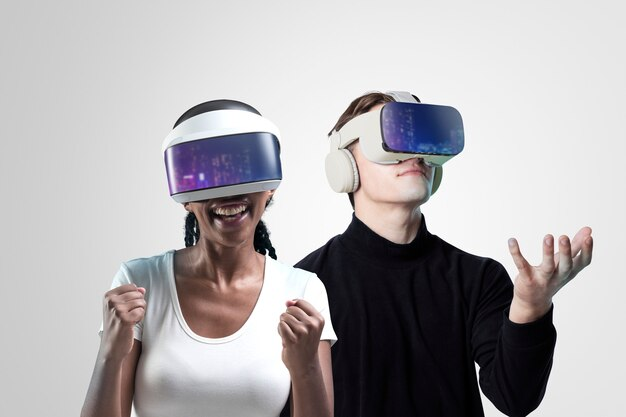
You can enter an entirely digital room where all objects stem from computers or scan a building through your mobile phone to display its data on your display. A fundamental difference exists between Virtual Reality (VR) and Augmented Reality (AR). The two technologies create transformative effects on multiple business sectors that include gaming and healthcare together with education as well as retail. Although these technologies bear common aspects, they each deliver different interactions to pursue different goals.
1. What is Virtual Reality (VR)?
VR technology generates a total replica of digital space which totally overlays the physical world. The Oculus Quest along with the HTC Vive and PlayStation VR models, represent the type of headsets users operate to experience complete 360-degree virtual environments. Users can interact with virtual worlds through motion controllers for games as well as other purposes that include occupational training and virtual exploration.
Key Features of VR:
The technology renders users a sensation of entering an entirely new reality.
- One must have special hardware which consists of both a VR headset and controllers used for spatial navigation.
- The whole virtual environment runs digitally, thus distracting users from physical reality.
2. What is Augmented Reality (AR)?
Through its digital element overlay technology AR aims to enhance ordinary spaces of the real world. The main distinction between AR and VR exists in their approach to reality since while VR presents everything digitally, it replaces the physical world, AR adds digital elements to viewable physical objects. Cell phones alongside AR glasses as well as tablets, provide straightforward access to those AR-based experiences which include both Pokémon GO gameplay and Google Lens utility.
Key Features of AR:
The technology merges digital content with actual surroundings as a substitute for replacing everything with virtual reality.
- Works on mobile devices and smart glasses without a need for a headset.
- Users actively sense their physical environment during the period they use digital overlays in AR.
3. VR vs. AR: Key Differences
| Feature | Virtual Reality (VR) | Augmented Reality (AR) |
| Environment | Fully digital, replacing reality | Enhances real world with digital overlays |
| Hardware Needed | VR headset, controllers | Smartphone, tablet, or AR glasses |
| User Interaction | Fully immersive, no real-world input | Users stay connected to real surroundings |
| Applications | Gaming, training, simulations | Retail, healthcare, education |
4. Applications of VR and AR

Virtual Reality Uses
VR-based solutions lead to industrial changes when full-immersion capacity produces better experiences for users.
- Consolidating Gaming & Entertainment through virtual reality produces deep gameplay immersion which includes Half-Life: Alyx and virtual escape rooms.
- Users in training programs such as flight education and medical surgeries together with emergency response teams all utilize VR platforms for realistic experience practices.
- Doctors apply VR simulations in their medical work both for performing procedures and for therapeutic applications.
- Travel agencies provide virtual reality tours featuring famous landmarks to potential travelers as part of their booking service.
Augmented Reality Uses
The application of AR enhances common interactions between people by making them smarter and more engaging.
- Users can try out furniture through IKEA Place before purchasing their desired pieces at retail stores.
- Healthcare – AR assists surgeons with 3D overlays of organs during procedures.
- Through AR marketing and advertising, firms develop interactive ad content to improve customer engagement.
- Navigation – Apps like Google Maps Live View overlay directions onto the real-world view.
5. The Future of VR and AR
Analysts predict the AR and VR market value will exceed $451 billion by 2027 because AI and 5G continue to advance. Apple Vision Pro, alongside Microsoft’s HoloLens, show how AR glasses will enable effortless augmented reality encounters. The social aspect of virtual reality keeps advancing, with Meta's Horizon Worlds developing a virtual world for workplace activities and entertainment needs.
Final Thoughts
Even though AR functions separately from VR, it works toward reshaping the relationship between humans and technology. Augmented Reality allows users to enhance their view of the world but Virtual Reality delivers complete transportation to different environments. Technology development will keep reshaping entertainment alongside education together with business operations into the future.
Want to explore cutting-edge VR and AR solutions? Seq Technologies provides innovative digital experiences for businesses and individuals alike!